Non Viral delivery of CRISPR/ Cas9 components
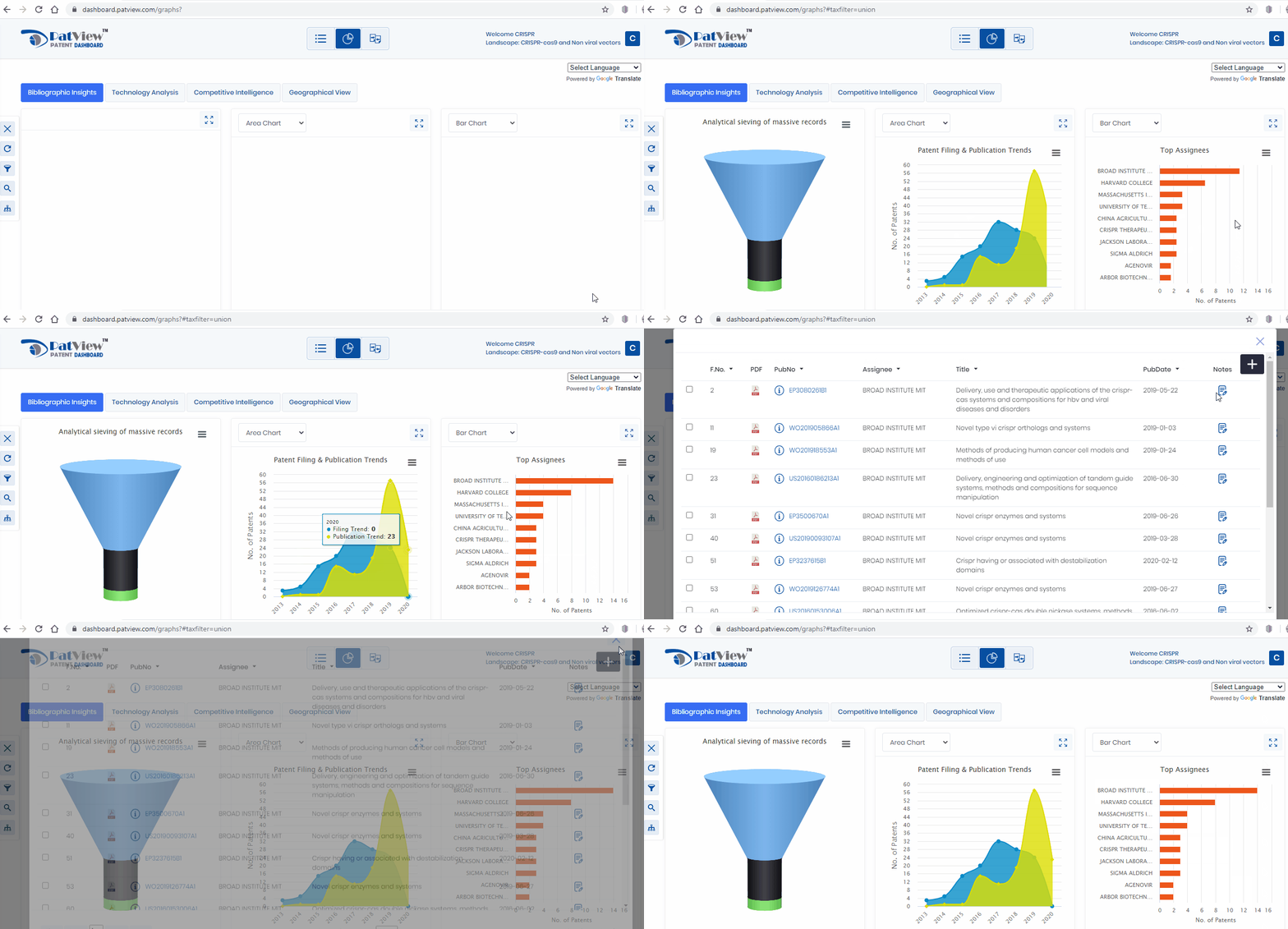
The patent dashboard has relevant patent data set of 102 patent references that were identified while screening among 1000+ patent results from over 100+ geographies. The in-vivo delivery system contains the non-viral vectors, lipid- or polymer-based nanocarriers delivery systems.
FREE PREVIEW
Our IP Consultant will walk you through the complete patent dashboard
In this PatView™
Buy patent dashboard or order a custom one
With PatView™ save thousands of dollars in annual patent database subscriptions. In comparison, just pay fraction of cost for handful of relevant patents picked by our experts that matters for you the most.
Dashboard Description
Non Viral delivery of CRISPR/ Cas9 Components
The patent dashboard has relevant patent data set of 102 patent references that were identified while screening among 1000+ patent results from over 100+ geographies.
In recent years, CRISPR (clustered regularly interspaced short palindromic repeat)/Cas (CRISPR-associated) genome editing systems have become one of the most robust platforms in basic biomedical research and therapeutic applications. Although viral vectors have been widely used in the delivery of the CRISPR/Cas9 system in vitro and in vivo, their fundamental shortcomings, such as the risk of carcinogenesis, limited insertion size, immune responses and difficulty in large-scale production, severely limit their further applications.
As in the search of alternatives for CRISPR/Cas delivery system to avoid various described shortcomings of viral vectors, the non-viral vectors are considered to be the best choice. With the rapid development of non-viral vectors, lipid- or polymer-based nanocarriers have shown great potential for CRISPR/Cas9 delivery. To date, the in vivo delivery of the Cas9 system remains challenging. However the recent development of non-viral vectors that are described as a promising vectors under clinical investigations. As research continued, more and more functional non-viral vectors have emerged. They not only have the ability to deliver a gene into the cells but also have other functions, such as the performance of fluorescence imaging, which aids in monitoring their progress, safe and stable targeted delivery, biodegradation, biocompatibility, low immunogenic responses and chemical design flexibility.
The CRISPR technology market is expected to grow from USD 562 million in 2018 to USD 1,715 million by 2023, at a CAGR of 25% during the forecast period. The CRISPR services segment is the faster-growing segment in the CRISPR technology market, by product and service. Based on services, the CRISPR services market is segmented into gRNA design and vector construction, cell line engineering, screening services, and other CRISPR services (mediated transcriptome editing and epigenome editing services). The cell line engineering services segment is expected to grow at the highest rate.The major biomedical applications of CRISPR include gene therapy, drug discovery, and diagnostics.Currently, 144 gene and cell therapy companies are based in the APAC that can potentially use CRISPR technology in the coming future.
Signicent LLP has conducted a quick landscape study to present some of the key players who have changed the picture of security in terms of the growth and development. Broad institute, MIT, Harvard Collegeare some of the contributors that have showed up during our quick analysis. We have tried to categorize the patents into different categories related to the CRISPR/CAS9 systems.
This patent dashboard shows you the patent data set for 102 patent references that were identified while screening among 1000+ patent results.
What would you like to do?
Quick Contact Form